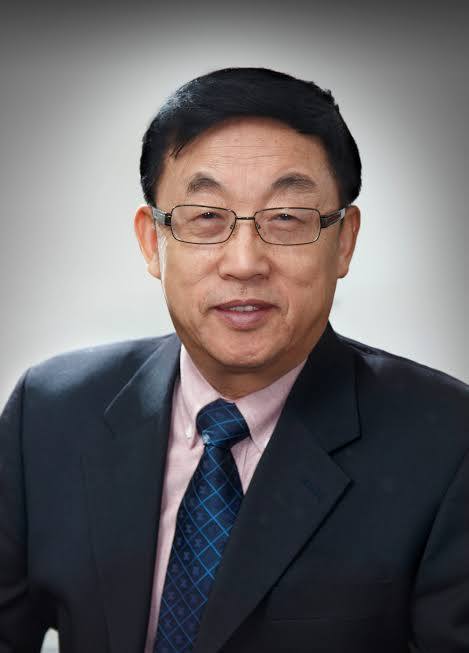
Prof. Tianyou Chai
TitleIntelligent Integrated System for Optimal Decision-making and Control Based on End-edge-cloud Collaboration
AbstractTo address the challenges that online optimization of operational decision-making and control in complex industrial systems cannot be realized, this talk proposes a unified structure and algorithm for integrated operational optimal decision-making and control, by combining control, optimization, and prediction with AI technology. It also proposed a parameter self-learning and self-optimizing algorithm for operational optimal decision-making and control integrating systems, by combining mechanism analysis with deep learning, and digital twin with reinforcement learning. An intelligent integrated system for optimal decision-making and control based on end-edge-cloud collaboration is developed, by combining the proposed method and the end-edge-cloud collaboration technology of Industrial Internet. The system includes the end-optimal decision-making and control system under actual operation, as well as the cloud-edge collaborative parameter self-learning and self-optimizing system for decision-making and control system. The parameter self-learning and self-optimizing system in digital space collaborates with the optimal decision-making and control system under actual operation. Thus, the end-operational optimal decision-making and control system realizes self-learning and self-optimization. The system has been successfully applied in the energy intensive equipment—fused magnesium furnace and achieved remarkable results in the reduction of carbon emission.
BiographyTianyou Chai received the Ph.D. degree in control theory and engineering in 1985 from Northeastern University, Shenyang, China, where he became a Professor in 1988. He is the founder and Director of the Center of Automation, which became a National Engineering and Technology Research Center and a State Key Laboratory. He is a member of Chinese Academy of Engineering, IFAC Fellow and IEEE Fellow. He has served as director of Department of Information Science of National Natural Science Foundation of China from 2010 to 2018. His current research interests include modeling, control, optimization and integrated automation of complex industrial processes.
He has published 300+ peer reviewed international journal papers. His paper titled Hybrid intelligent control for optimal operation of shaft furnace roasting process was selected as one of three best papers for the Control Engineering Practice Paper Prize for 2011-2013. He has developed control technologies with applications to various industrial processes. For his contributions, he has won 5 prestigious awards of National Natural Science, National Science and Technology Progress and National Technological Innovation, the 2007 Industry Award for Excellence in Transitional Control Research from IEEE Multiple-conference on Systems and Control, and the 2017 Wook Hyun Kwon Education Award from Asian Control Association.

Prof. Caroline Ling Li
TitlePhysiological AI: From Wearable Sensing to Intelligent and Inclusive Healthcare
AbstractAdvances in wearable sensing and artificial intelligence are creating new opportunities to understand human health continuously and in real-world environments. This keynote will explore the emerging field of Physiological, where multimodal signals such as PPG, ECG, EEG and movement data are combined with machine learning to identify, track and predict physiological and cognitive states. Drawing on recent research in cardiovascular monitoring, mental health, pain and personalised sensing, I will discuss how we can move from signal acquisition towards clinically meaningful and trustworthy AI. The talk will also highlight key challenges in individual variability, multimodal data integration, generalisation and translation, and consider how next-generation physiological AI can enable more personalised, accessible and inclusive healthcare.
BiographyProfessor Caroline Ling Li is Professor of Biomedical Engineering and Artificial Intelligence at City St George’s, University of London. Her research spans wearable sensing, biomedical signal processing, and artificial intelligence, with a focus on understanding human physiological and cognitive states and developing data-driven approaches for health monitoring and clinical applications.
She has contributed to interdisciplinary research programmes in pervasive sensing and digital health and works closely with industry to translate research into real-world impact. She currently serves as Chair of the IEEE Computer Society UK and Ireland Section. Her work on creative applications of brain–computer interfaces has also been recognised through the British Council’s Showcase Your Innovation programme.

Prof. Muyiwa Oyinlola
TitleIndustrial AI for Circular Energy Systems in Africa: From Intelligent Infrastructure to Inclusive and Scalable Development
AbstractAfrica’s clean energy transition is accelerating, but the challenge extends beyond deploying more renewable energy technologies. As decentralised renewables, microgrids, electric mobility, batteries, inverters and power electronics expand across the continent, there is a growing need to ensure that these systems remain reliable, affordable and productive throughout their lifecycle, while creating pathways for maintenance, repair, reuse, repurposing and responsible recovery. This keynote explores how Industrial AI can provide the intelligence needed to support more circular energy systems in Africa. Using circular microgrids as the central framing, it considers four interconnected capabilities: sensing system and asset condition; predicting faults, degradation and remaining useful life; optimising generation, storage and demand; and supporting lifecycle decisions that retain the value of energy technologies for longer. Applications including condition monitoring, predictive maintenance, intelligent energy management and data-informed assessment of batteries and power electronics illustrate how AI can connect operational performance with circularity.
BiographyProfessor Muyiwa Oyinlola is an internationally recognised academic and engineer whose work sits at the intersection of sustainable development, energy access, and innovation. He currently serves as the Director of the Circular Economy Powered Renewable Energy Centre (CEPREC), a Pan-African Centre of Excellence focused on accelerating Africa’s just energy transition through circular economy principles and clean energy innovation. A Professor of Innovation for Sustainable Development at De Montfort University, UK, Professor Oyinlola brings over a decade of experience leading multi-institutional, transdisciplinary research collaborations. He is a Senior Fellow of the Higher Education Academy and holds degrees in Mechanical Engineering (BEng), Renewable Energy Engineering (MSc), Sustainable Energy Engineering (PhD), and Education Practice (MA). He is also pursuing an MBA through the Senior Leader Apprenticeship at the University of Exeter.
Professor Oyinlola’s research addresses urgent global challenges including clean energy access, sustainable housing, waste management, digital transformation, and entrepreneurship. He has successfully led and contributed to over ten major research projects, securing more than £8 million in competitive funding from leading institutions such as UK Research and Innovation (UKRI), the Foreign, Commonwealth and Development Office (FCDO), the British Council, and the Royal Academy of Engineering. These projects often involve multi-stakeholder and multi-sectoral partnerships and focus on ensuring that solutions are contextually grounded, technically sound, and socially acceptable. Through CEPREC, Prof Oyinlola leads pioneering work on circular economy approaches to energy innovation, exploring how locally sourced materials, renewable energy, and digital tools can be leveraged to develop resilient infrastructure and create green jobs in Africa. His leadership in this area has catalysed new models for co-developing technologies that are sustainable, inclusive, and scalable.
He is also the Chair of the DITCh Plastic Network, a Pan-African initiative of over 200 members committed to using digital innovations to transition Africa to a circular plastic economy. Under his guidance, the network has launched projects and platforms that empower universities, entrepreneurs, and informal sector actors to co-create value from plastic waste. Previously, Prof Oyinlola served as Director of the Institute of Energy and Sustainable Development (IESD) at De Montfort University, where he led the development of a five-year strategic research agenda and oversaw a team of academics and doctoral researchers focused on sustainability. His earlier research contributed to areas such as solar thermal systems, thermal comfort, and affordable low-carbon housing—most notably the award-winning Bottle House project that upcycles plastic bottles into thermally efficient homes. Prof Oyinlola’s work is widely published and has informed policy through collaborations with organisations such as Chatham House, UNEP, and the African Circular Economy Alliance. He is a sought-after speaker at international conferences and serves as a peer reviewer and guest editor for several academic journals. Professor Oyinlola is deeply committed to bridging the gap between research and practice. His vision is anchored in the belief that sustainable development must be locally grounded, culturally relevant, and systemically inclusive—an ethos that continues to drive his research, leadership, and engagement across continents.
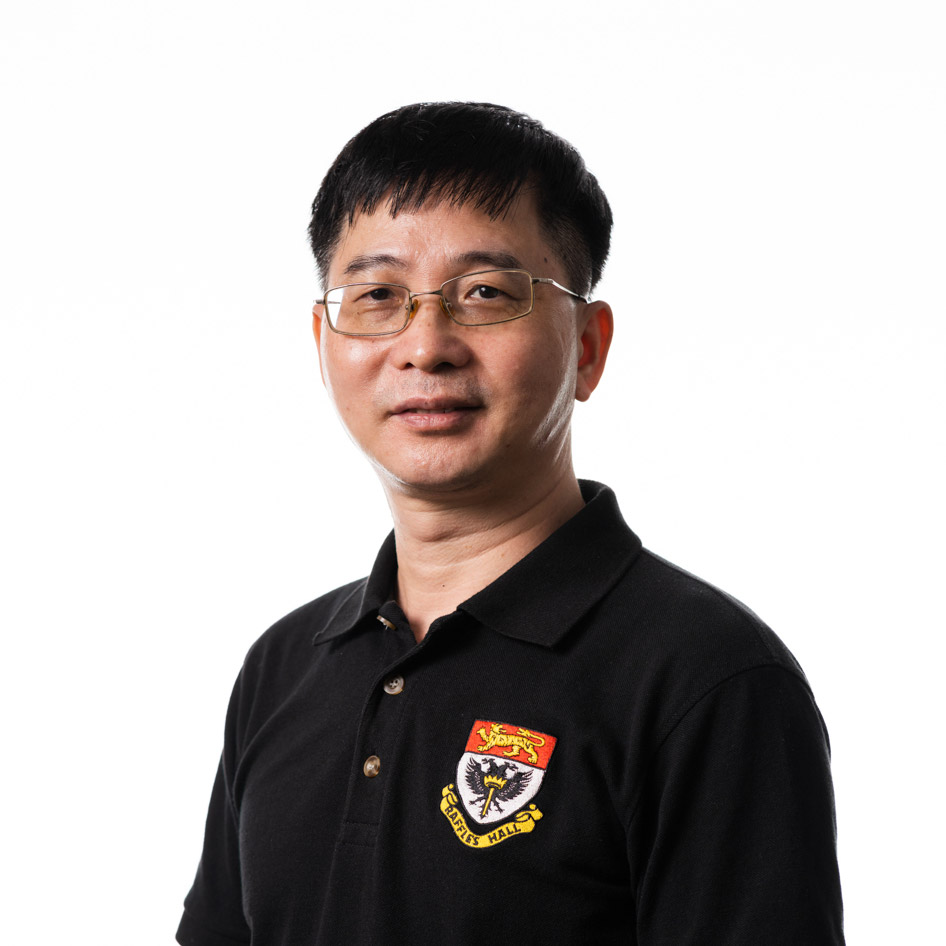
Dr. Haoyong Yu
TitleTowards wearable robotics with better portability, safety, and comfort
AbstractWith the rapid population aging in many developed countries, wearable robotics, commonly known as exoskeleton robots, are believed to have wide applications in both industry and Healthcare. However, the current market size of wearable robotics is still quite small compared with other robotics sectors due to the limitations in portability, safety, and user comfort. At NUS Bio-robotics Lab, we are developing a series of wearable robotics for rehabilitation and worker assistance. We adopt a modular approach based on a set of core technologies and components developed in the lab, which includes compliant actuation, cable drive mechanism, wearable sensors and learning based movement detection algorithms. We achieved better portability with novel differential mechanism design and cable driven transmission, safer human robot interaction with compliant actuation, and better human robot movement synchronization with novel sensing strategies. In this talk, I will give a brief introduction to some of our wearable robots in real world applications.
BiographyHaoyong received the B.S. and M.S. degrees in Mechanical Engineering from Shanghai Jiao Tong University, Shanghai, China, in 1988 and 1991 respectively. He received the Ph.D. degree in Mechanical Engineering from Massachusetts Institute of Technology, Cambridge, Massachusetts, USA, in 2002. He was a Principal Member of Technical Staff at DSO National Laboratories, Singapore, until 2010. His research areas in DSO included exoskeleton and humanoid robots, intelligent ground and aerial robots, and bio-inspired robots. Dr. Yu joined the Department of Biomedical Engineering in 2010. He is also a Principal Investigator of the Singapore Institute of Neurotechnology (SINAPSE), and the Advanced Robotic Centre at the National University of Singapore.

Dr. Xiaoyu Guo
TitleTowards ‘Embodied Energy’: Coordinated Flight and Energy Management of Hydrogen-Powered Aircraft
AbstractWith the global initiative towards low-altitude economy and carbon neutrality, the hydrogen-battery hybrid energy system has emerged as a promising solution for long-endurance flight with characteristics including high energy density, strong dynamic response, and zero carbon emissions. This report focuses on enabling safe and autonomous flight of hydrogen-powered UAVs in complex environments via integrated management of the flight and energy subsystems, and application of hydrogen-powered UAVs in low-altitude applications such as aerial logistics and aerial monitoring. Finally, perspectives on bio-inspired ‘embodied energy’ robotic systems, such as the ‘Polar-hydrogen 1’, the first reported hydrogen-powered aircraft to fly in Antarctica, is introduced.
BiographyXiaoyu Guo is currently an Assistant Professor in the Department of Mechanical Engineering at City University of Hong Kong. He received his B.Eng. degree from Beihang University, his M.Phil. (with Distinction) from the University of Cambridge, and his Ph.D. from the University of Manchester. He is a recipient of the RGC Postdoctoral Fellowship Scheme (Hong Kong), Gold Award at the International Exhibition of Inventions Geneva, and the Grand Award at the Asia Exhibition of Innovations and Inventions. He has published over 40 papers in international journals including Nature Communications, IEEE Transactions on Automatic Control, and IEEE/ASME Transactions on Mechatronics, and has been granted over 30 invention patents. He currently serves as associate editor for IEEE Transactions on Industrial Informatics, IEEE Transactions on Systems, Man, and Cybernetics: Systems, and Unmanned Systems. His research interests include sustainable robotic systems and bio-inspired sensing and control.
Dr. Weibo Liu
TitleAI-Based Industrial Data Analytics for Metal Additive Manufacturing
AbstractMetal Additive manufacturing (MAM) is a popular manufacturing technique which is broadly exploited in rapid prototyping and fabricating components with complex geometries. To ensure the stability of the MAM process, it is of critical importance to carry out data analytics on MAM process by monitoring the sensor data collected and detecting potential defects/outliers. This goal of data analytics leads to the development of a knowledge-based system which is to readapt Product engineering stages: 1) Building an AI model to detect future deviations caused by complex geometries to propose alternative geometry changes; and 2) Modifying the manufacturing strategy based on trained AI algorithms to avoid deposition paths that cause final distortions or heat accumulation. In this talk, we focus on the defect detection of thermal image data and outlier detection of welding sensor data based on artificial intelligence techniques. In the first part, a novel image processing method, an image-enhancement generative adversarial network, with aim to improve the contrast ratio of the thermal images for image segmentation will be discussed. In the second part, a novel outlier detection method for anomaly detection will be introduced. The proposed methods are exploited in analyzing the real-world industrial data collected from a wire arc MAM pilot line in Sweden.
BiographyWeibo Liu received the B.Eng. degree in Electrical Engineering from the Department of Electrical Engineering & Electronics, University of Liverpool, Liverpool, U.K, in 2015, and the Ph.D. degree in Artificial Intelligence in 2020 from the Department of Computer Science, Brunel University of London, Uxbridge, U.K. He is a Member of the Institute of Electrical and Electronic Engineers (IEEE) and a Fellow of the Higher Education Academy (FHEA). He is currently a Lecturer in the Department of Computer Science, Brunel University of London, Uxbridge, U.K. His research interests include Intelligent Data Analysis, Evolutionary Computation, Transfer Learning, Machine Learning and Deep Learning with applications to Healthcare Data Analytics and Industrial Big Data.
Dr. Liu serves as an Associate Editor for IEEE Transactions on Instrumentation and Measurement, the Journal of Ambient Intelligence and Humanized Computing, the Journal of Cognitive Computation, and an Editorial Board Member for the Journal of Scientific Reports. He also serves for the Guest Editor for IET Control Theory & Applications. He has been listed as World’s Top 2% Scientists by researchers from Stanford University. He is a very active reviewer for many international journals and conferences, and a member of program committee for many international conferences.
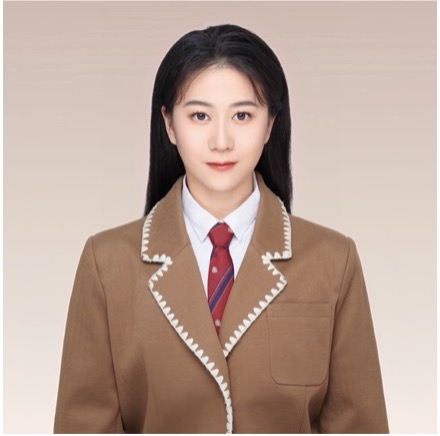
Dr. Yuyang Zhou
TitleFully Probabilistic Control Design for Complex Stochastic Systems
AbstractComplex dynamical systems have garnered significant interest in the realms of control and engineering, as they offer a cohesive and natural framework for the mathematical modelling of diverse real-world systems, such as communication networks, power grids, and chemical processes. The inherent characteristics of these systems, such as high dimensionality, intricate structures, complex models with multiple modes of switching, and substantial uncertainties, pose notable challenges for system analysis, estimation, and particularly for control. This talk will introduce a novel decentralised probabilistic control framework designed for complex stochastic systems. It will offer a fresh research outlook dedicated to refining the control of such systems. In this talk, we will delineate the core principles and applications of the framework, showcasing its contribution to the development of innovative control strategies for complex stochastic systems.
BiographyYuyang Zhou received her B.Sc. degrees in Electrical and Electronic Engineering from The University of Manchester, United Kingdom, and Beijing Jiaotong University, China, in 2014. She subsequently received her Ph.D. degree in Control Theory from the School of Electrical and Electronic Engineering at The University of Manchester in 2018. From 2018 to 2021, she worked as a Research Associate in the Faculty of Engineering and Applied Science at Aston University, Birmingham, United Kingdom. She is currently a Lecturer in the School of Computing, Engineering and the Built Environment at Edinburgh Napier University, Scotland, United Kingdom. Her current research interests include probabilistic and stochastic control, minimum entropy control, probability density function (PDF) control, and decentralised control.